

How to Create Positive Energy in Your Home
How to Create Positive Energy in Your Home Before the Season of Gathering
The season is about to turn, and with it comes the annual instinct.
Clean everything. Buy something new for the table. Apologize for the house as people come through the door.
None of that is what makes a home feel welcoming.
I have been in immaculate homes that held everyone at arm’s length, and cluttered ones where nobody wanted to leave. The difference is not tidiness, and it is not money.
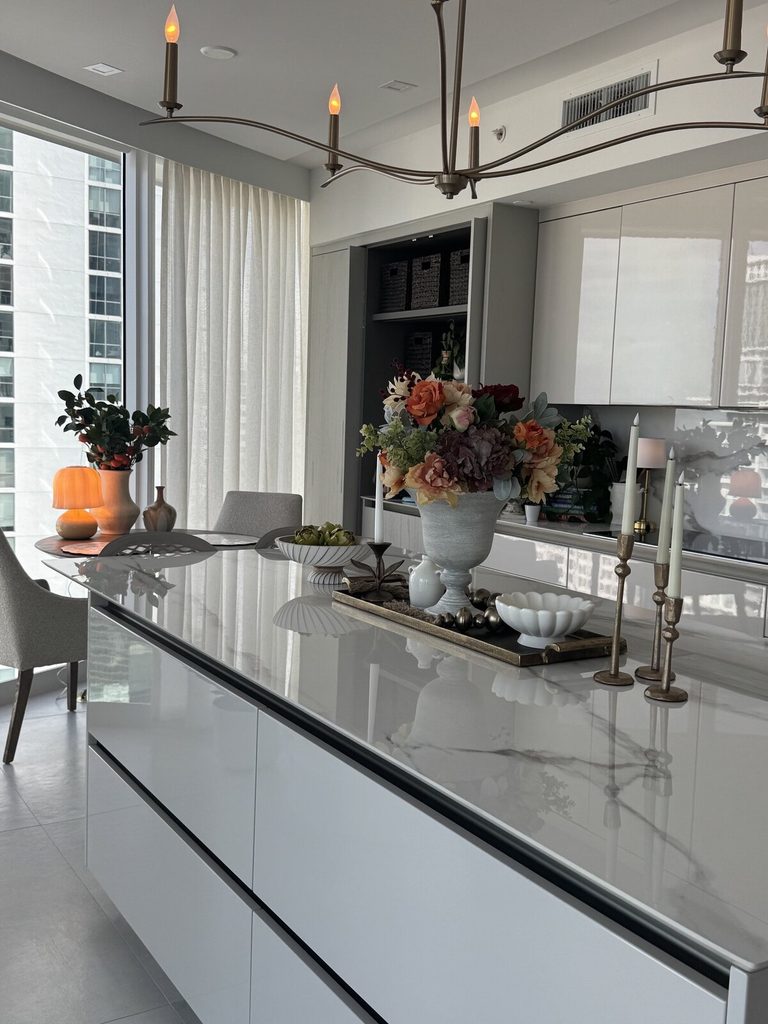
How to create positive energy in your home, practically
Welcome is made of four things, and you can change all of them this week.
Light. Scent. Seating. Sound.
That is the list. Everything else the flowers, the table, the food sits on top of those four and cannot compensate if they are wrong.
This is sensory home design in its most practical form, and it is the part of holistic interior design that costs the least and changes the most.
1. Light does most of the work
If your rooms are lit from the ceiling, on one switch, at one brightness, your guests’ bodies are being told it is the middle of the day at eight in the evening.
Nobody relaxes under a flat overhead light. They stay upright, they speak a little louder, and they leave earlier than they meant to.
Put lamps at seated height. Three small sources beat one large one, every time. Put whatever you can on a dimmer. Then turn the overhead off entirely once people arrive and see how the volume in the room changes.
Candles are not decoration here. Flame is the only light that moves, and a room with movement in the light feels alive in a way a static room does not.
2. Scent arrives before you do
Scent bypasses thought. It is the first thing your guests register and the last thing they remember, and most people leave it entirely to chance.
Start by removing rather than adding. Air the house properly every window open for twenty minutes, even in October, especially the rooms nobody uses. Stale air reads as neglect no matter how clean the surfaces are.
Then choose one scent and let it carry the house. Not three competing ones from three rooms.
Citrus for energy and brightness at the entry. Something warmer, cedar, vanilla, fig, where people will sit. Rosemary or bay simmering on the stove costs nothing and smells like a house where someone is cooking for you.
3. Seating decides whether people talk
This is the one almost everybody gets wrong, and it is the reason a party migrates to the kitchen.
Furniture pushed flat against the walls creates a room nobody can hold a conversation in. People end up calling across an empty floor, so they stand up and go somewhere smaller instead.
Pull the seating in. Chairs closer than feels right. A conversation group where two people could speak without raising their voices. Nothing should have to be dragged into position when guests arrive, if it does, the arrangement is wrong the rest of the year too.
And give every seat a surface within reach. A guest holding a glass with nowhere to put it is a guest who cannot relax.
4. Sound sets the room before anyone speaks
Silence in a room people are arriving into feels like scrutiny. Everyone hears their own voice too clearly and speaks more quietly than they want to.
Music before the first guest arrives, low enough to talk over, is one of the simplest Feng Shui tips I give, and one of the most effective things you can do to make your home feel peaceful.
Also worth noticing: the sounds you have stopped hearing. A rattling extractor fan, a door that scrapes, a television nobody is watching. Guests hear all of them.
The ten feet that matter most
If you only do one thing, do this one.
Everything begins at your front door. Clear the floor completely, put light at eye level, give arriving people a surface for what they are carrying, and put something living where the eye lands.
People decide how a house feels within about eleven seconds of entering it, and almost all of that happens before they reach a room you have prepared.
Try this: the ninety-minute welcome reset
The day before people come, in this order.
Open every window for twenty minutes. Do this first so the house airs while you work.
Clear the entry floor and one landing surface. Ten minutes.
Walk the route a guest takes door, to where they will sit, to the bathroom. Fix only what is on that route. Nothing else needs touching.
Pull the seating in and put a surface within reach of every chair.
Swap the lighting. Lamps on, overheads off, candles where people will sit.
Start the music and the scent before the first knock, not after.
Ninety minutes, almost no money, and it will do more than a week of deep cleaning.
And stop apologizing
One more thing, and it is not a design point.
The apology at the door for the house, the mess, the thing you did not get to does more damage to the atmosphere than whatever you are apologizing for.
It tells your guests the house is being judged, so they start judging it too.
Open the door, be glad to see them, and say nothing about the state of anything.
If you want your home genuinely ready for the season rather than merely tidy, that is what a styling consultation is for.
Book a styling consultation.
Elevate Your Space. Awaken Your Soul.
Common questions
How to make your home feel peaceful when it is full of people
Lower, warmer light and enough seating that nobody is standing by default. Peace in a full room comes from people being comfortably settled, not from quiet.
How to make a home feel calm and grounded, quickly
Clear horizontal surfaces, turn off overhead lighting, and add something natural — branches, a plant, a bowl of fruit. Fifteen minutes, and it works every time.
Do I need to redecorate before hosting?
No. Almost everything that makes a house feel welcoming is about light, air, scent, sound and the position of the furniture you already own.
What is a styling consultation?
A session focused on the final layer — arrangement, lighting, surfaces, art placement and the objects you already have. Soulful styling is my name for it, it is the lowest-commitment way to work with me, and it is often all a home needs.


Be the first to comment