

What Is Design Alchemy in Interior Design?
What Is Design Alchemy? Interior Design That Changes How a Home Feels
If you have already done this once, this is for you.
You hired someone competent. You spent real money. The result was, by every measure available, a success.
People say the right things when they visit. The photographs are lovely. Your friend with excellent taste was complimentary and meant it.
And you have stopped mentioning that it did not fix the thing you hired them to fix.
Because you cannot name the thing. And saying it out loud makes you sound impossible to please.
You are not impossible to please.
This is the gap that Design Alchemy in interior design exists to close.
The project worked one layer of your home. The answer was sitting in a different one.
What is Design Alchemy in interior design?
Design Alchemy is interior design that works with the energy of a home as well as its aesthetics.
You may have seen the same idea called holistic interior design, energetic interior design, intentional interior design, transformational interior design or soulful interior design.
Those names are all pointing at the same missing layer. I call it Design Alchemy because that is what it does.
Why I call it alchemy
I did not choose the word for decoration.
Alchemy is transformation. Not improvement. Not refreshment. Changing what a thing fundamentally is.
A house can be made to look different in a weekend.
Making it a different place to live in is another discipline entirely.
Your home has three layers
Every home is running three at once. Most projects only ever address the first.
Layer one — form and function
Proportion. Light. Materials. Whether the kitchen works. Whether the sofa is the right depth.
Good designers live here. If yours did this well, your house looks excellent. This layer is real and it matters and it is not the one you are struggling with.
Layer two — energy and flow
How movement actually travels through your home. Where it stalls. Where it drains straight out through the sliders. Whether the route from your front door to your kitchen makes you cross the whole house, or lets you arrive.
Very few projects examine this, because it does not show up in a rendering.
Layer three — story
Who lives here. Who you are becoming.
And whether your home is still organized around the woman you were when you bought it.
Almost no project asks this, because it is not a design question.
It is usually where the answer is.
The questions nobody asked you
Think back to the start of your last project.
You were asked about your budget. Your timeline. Your colors. How many people you seat for dinner. Whether you liked the mood board.
Here is what you were almost certainly never asked.
- What has changed in your life since you moved into this house?
- Which rooms do you avoid, and how long has that been true?
- What is in the closet you have not opened?
- Who will be living here in five years, and how?
- What do you want to be able to do in this home that you cannot do now?
Those are not spiritual questions. They are scoping questions.
A project that never asks them can only improve the house you already had. And if the house you already had was built around a life that has since changed, improving it will not touch the problem.
Why this happens, even to excellent designers
It is not incompetence, and it is not worth being bitter about.
It is scope. A designer is engaged to deliver a beautiful, functional, finished result and that is precisely what most of them deliver. The layer underneath was never in the brief.
There is a more human reason too.
Those questions are uncomfortable to ask a woman you have just met.
It is far easier to talk about upholstery.
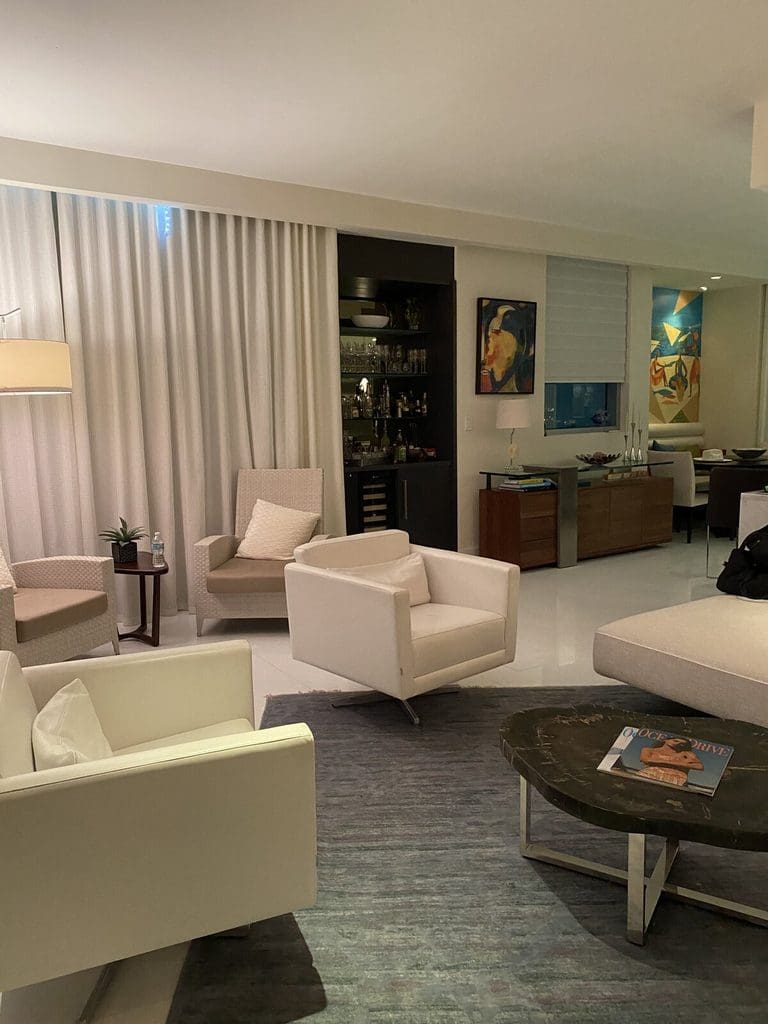
Where the energetic layer actually changes a decision
People assume this part is a finishing touch, applied at the end like a blessing over completed work.
It is not. It changes decisions early, while changing them is still inexpensive.
Where the bed goes, which changes the whole bedroom plan.
Which wall the desk faces, which changes the lighting and the power.
What happens in the first ten feet past your front door, which changes the entry furniture and often the flooring.
Whether we open a wall, or deliberately do not. Because an open plan that lets everything run straight out to the lanai is not always the gift it appears to be on a drawing.
By the time a project reaches styling, those decisions are decades old in construction terms.
What clients tell me afterward
I want to be careful here, because this field attracts a great deal of overclaiming and I want no part of it.
What people report back most consistently is quiet.
They start using rooms they had abandoned.
They stop apologizing for their home when guests arrive.
They sleep.
They linger somewhere they used to walk straight through.
Some report far larger changes than that, in their work and their health and their relationships. I have watched the pattern long enough to have stopped calling it coincidence. But I will not tell you I caused it.
Environments shape behavior. Behavior, repeated over years, shapes a life.
That is not mysticism. It is just slow. And slow is unglamorous, and slow is what actually works.
Try this before you hire anyone again
Do not go looking for a better designer. Change what you brief.
Before you interview anybody, write down the answer to two questions.
What do I want to be able to do in this home that I currently cannot?
What has changed in my life since I moved in?
Then say both out loud in the first meeting, and watch what happens.
Some people will nod politely and steer you back to the palette.
Some will put the pen down and ask you more.
The second kind is the one you want, whatever they call themselves.
Common questions
Is this Feng Shui, or is it interior design?
Both, integrated. I am a certified Feng Shui consultant and a practicing interior designer, so you are not hiring two people and hoping their advice agrees.
Do I have to be spiritual for this to work?
Not at all. Some of my most contented clients have no interest in the language I use and simply wanted a home that finally worked.
Can you do this on one room?
Is Design Alchemy the same as holistic interior design?
It sits in the same family. Holistic and energetic interior design describe an intention. Design Alchemy is the specific method I use to deliver it, with Feng Shui training underneath and full-service design on top.
Was the money I spent last time wasted?
No. The first layer is genuinely done, and a home with good bones, good light and good proportion is a much better starting point than one without. What is left is usually far smaller than another renovation.
If any of this describes the home you are living in, let us have a conversation.
Book a discovery call and tell me what has changed.
Elevate Your Space. Awaken Your Soul


Be the first to comment