

Why Your Beautiful Home Doesn’t Feel Right?
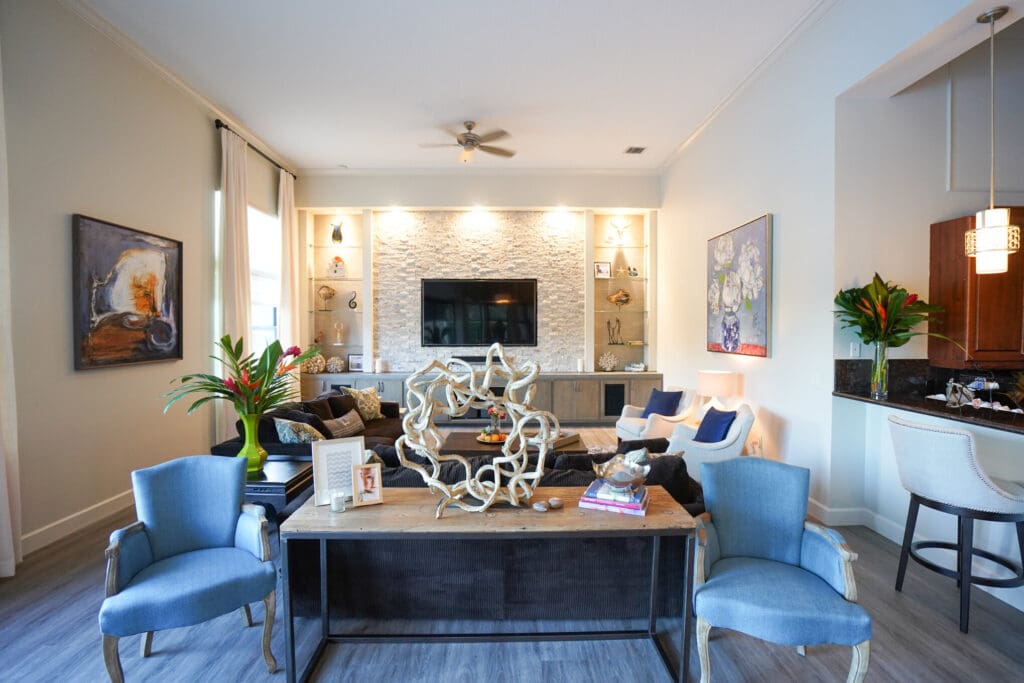
Why Your Beautiful Home Still Doesn’t Feel Right?
“I know how this sounds. My house is beautiful but it doesn’t feel right.”
If you have ever thought some version of that and immediately talked yourself out of it, this one is for you.
Nobody says it confidently.
It always arrives apologetically, usually with a small embarrassed laugh attached, as though the woman saying it is about to be told she is spoiled.
And then most people never say it again.
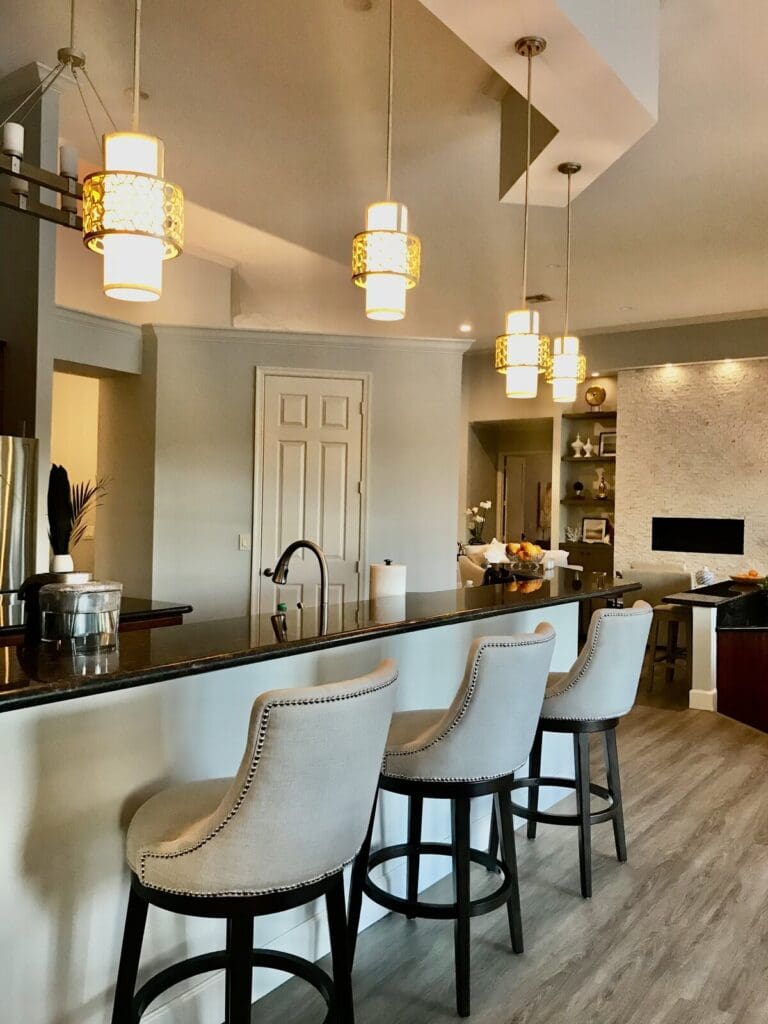
“My house is beautiful but it doesn’t feel right” why you stopped saying it out loud
You have been taught, more thoroughly than you probably realize, that a beautiful home is the finish line.
So if you have arrived and you are still not at ease, the fault must be somewhere in you.
Ingratitude. Restlessness. Something to work on privately rather than raise at a dinner table.
That reasoning is very common, and it is wrong.
Your home is not a test you failed. It is an instrument that is out of tune.
And instruments do not tune themselves simply because they were expensive.
1. The room was arranged for a camera, not a body
Furniture pushed flat to the walls. A wide empty floor in the middle. A seating group where no two people could comfortably talk.
Rooms are for bodies.
A body wants to sit down without crossing an expanse. To reach a surface for a glass. To face another person at a comfortable distance.
When a room is composed for the eye alone, you feel the absence of that consideration even if you never identify it.
Sit in the chair you would offer a guest. Can you set a drink down without standing up? Can you talk across the room without raising your voice? Is there anything behind you?
Most uncomfortable rooms fail two of those three. Pulling the seating in off the walls fixes it in an afternoon.
2. You cannot see the door from where you sit
This is the one I correct most often, and it changes the most for the least money.
If your bed, your desk or the chair you actually use has its back to the entrance, part of you never entirely stands down.
You are not frightened. You are simply never fully at rest, in the place you go specifically to rest.
Turn the chair. Move the desk.
In a bedroom where the layout genuinely allows nothing better, a well-placed mirror that lets you see the door reflected does a great deal of the work.
3. The energy runs straight through and out
Stand at your front door and look.
If you can see clear through the house to a wall of sliders and the water beyond, you are living in a beautiful corridor.
This is a specifically Florida problem. We build for the view, and the view is often a straight line from entry to lanai.
Everything that arrives runs directly through and leaves. The room never accumulates anything — including calm.
The remedy is not to block your view. It is to slow the path.
A console table. A rug that interrupts the line. A plant with real substance. A pendant that draws the eye upward.
You are creating a reason to pause, not building a wall.
4. Nothing in the room is actually yours
Everything bought at once, from one place, for this house. The art chosen because it matched. No object in the room that carries a memory.
A home assembled in a single transaction has no depth of time in it. And depth of time is a great deal of what makes a room feel like it belongs to someone.
The correction is rarely a purchase. It is usually retrieval.
The piece from your grandmother. The painting from the old house. The thing in the closet you kept because it did not match.
Let it not match. That is frequently the object that finally makes the room yours.
This is the reason clients resist most, because it sounds like a criticism of taste. It is not. A home bought whole is usually the result of exhaustion rather than laziness — a move, a deadline, a renovation that ran long. That is a reasonable decision. It simply leaves a room with no history, and history is added afterward, one true object at a time.
5. The lighting is one note
Recessed ceiling lights, all on the same switch, all evening.
Your body reads light as time.
A room held at a constant brightness gives it no information, so evening never quite arrives and the room never softens.
Add lamps at seated height. Put things on dimmers. Let the light drop as the day does.
Of everything here, this is the change clients report the fastest response to. It is also close to the cheapest.
6. The room is holding something that already ended
The office of a business you have closed. The bedroom of a child who moved away, preserved exactly. The dining set bought for a family configuration that no longer gathers.
Rooms curating an ended chapter feel heavy because, functionally, they are memorials.
There is nothing wrong with keeping what matters. But there is a difference between honoring something and being unable to move past it — and a room usually knows which one it is doing before you do.
The useful question is not whether to keep things. It is whether the room has a present-tense purpose.
7. The house was designed for a life you no longer live
This is the largest of the seven, and people arrive at it last.
The formal dining room for entertaining that quietly stopped.
Four bedrooms for two people.
A kitchen laid out around cooking for five.
A floor plan that assumed everyone would be home at six.
None of that is a flaw in the house. It is a mismatch between the house and the woman you have become since you moved in.
And it is usually the moment someone realizes she is not actually asking about cushions.
Her home has been raising that question with her for a while. She has been answering it with soft furnishings.
Try this: two changes this week
If you take nothing else, take these.
First. Move one chair so you can see the door from it. Live with it for a few days before deciding anything.
Second. Put two lamps at seated height in the room you use most in the evening, and stop using the overhead light in there after dark.
Both are close to free.
Between them they will tell you a great deal about whether the rest of this applies to you — and they will do it faster than any amount of thinking about it will.
And one thing to stop doing
Stop apologizing for noticing.
The ability to walk into a room and register that something is wrong, without being able to explain why, is not a fault.
It is a fairly rare form of attention, and it is almost always accurate.
Common questions
Why does my house feel heavy when you walk in?
Usually one of three things. The entry is blocked or cluttered, so nothing can arrive properly. The light is flat, so your body cannot read the time of day. Or a room near the front of the house is holding something that has not been dealt with.
Why one room feels beautiful and the next feels wrong?
Yes, this is common, and it is not in your head. A single room can be badly placed relative to the front door, badly lit, or holding something the rest of the house is not. Rooms are not uniform, and neither is the energy moving between them.
How to improve energy flow in a home?
Start with the path. Walk from your front door to the room you use most and notice anything you have to step around. Then look at what sits in a straight line from the entrance. Slowing a fast path and opening a blocked one will change more than new furniture.
How to make a home feel calm and grounded?
Lower, warmer light. Natural materials you can actually touch. Fewer objects on horizontal surfaces. And at least one chair with something solid behind it, facing the door.
Is this Feng Shui interior design, or ordinary design?
How long before I notice a difference?
The lighting and seating changes are usually felt within a week. The larger structural ones take longer and are worth more.
If several of these describe your home, they are probably connected and a walkthrough will find the pattern faster than a list will.
Book a Feng Shui consultation and let us look at it together.
Elevate Your Space. Awaken Your Soul.


Be the first to comment