

How to Create a Sacred Space at Home
How to Create a Sacred Space at Home: Living the Feng Shui Lifestyle
There is a line I come back to more than any other in my work.
Regard your home as a sacred space, and your life as a sacred practice.
People usually hear that and picture a corner. A cushion, a candle, a small shelf with something meaningful on it. Somewhere to go and be quiet for ten minutes before the day takes over.
That is lovely. It is also not what I mean.
A sacred space at home is not a corner you retreat to. It is the whole house, treated as though it matters.
So when people ask me how to create a sacred space at home, my answer is rarely about objects. It is about attention, and about a handful of decisions that cost almost nothing.
What a sacred space actually is
The word sacred sounds religious, and for some people it is. For others it simply means set apart and treated with care.
Both work here.
Because what changes a room is not what you put in the corner. It is the decision that this place is worth your attention.
Most homes are not treated that way. They are treated as storage with furniture in it. Things accumulate. Rooms get used the way they were used last year. Nobody asks whether any of it still fits.
A sacred space is a home where someone is paying attention. That is nearly the whole definition.
Why the Feng Shui lifestyle is not a set of rules
When people first look into adopting the Feng Shui lifestyle, they usually find a list. Do not put a mirror there. Never have the bed under a window. Paint this wall this color.
Rules are the smallest part of it, and honestly the least interesting.
Holistic Feng Shui is about relationship. The relationship between you and the place you live.
That is also what separates it from most decorating advice, and it is why holistic interior design and Feng Shui end up describing much the same work from two directions.
It asks a different question than a rule does. Not “is this correct?” but “is this supporting the person living here?”
Those two questions produce very different homes.
Living in harmony with your true nature
Here is where most design advice goes wrong for women in a new chapter.
It tells you what is current. It does not ask who you are.
And so a home gets built around a style rather than around a person, and it photographs beautifully and never quite fits. You cannot say why, because nothing in it is wrong.
Soul-styled interiors start from the opposite direction.
We start with your nature. How you actually live. What genuinely restores you, rather than what you have been told should. Whether you need quiet or movement, color or calm, company or solitude, and where in the house each of those belongs.
Then we design toward that. This is the thinking behind soulful styling, which is the same instinct applied to the final layer of a room.
The result does not look like a trend. It looks like you, which is a far rarer thing and considerably harder to achieve.
Becoming the curator of a life you love
I use the word curator deliberately.
A curator does not own everything in the building. She decides what belongs, what is shown, what is stored, and what is finally released.
Your home deserves the same eye.
Most of us are not curating. We are accumulating, and then apologizing for the accumulation, and then buying storage for it.
Curation is the practice of deciding. What stays. What goes. What gets the good wall. What has been sitting in a box for four years because you could not decide, which is itself a decision you have been making daily without noticing.
Feng Shui for a nourishing and supportive home
When a home is nourishing, it does specific things. It is worth naming them, because then you can check your own house against the list.
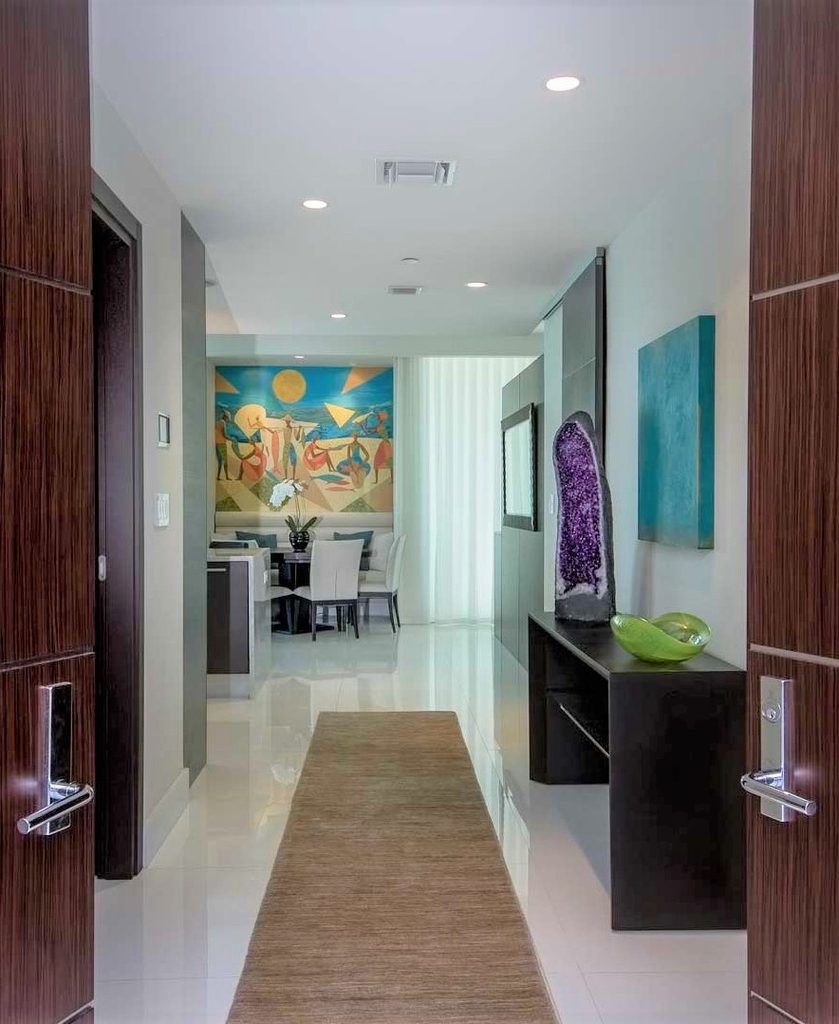
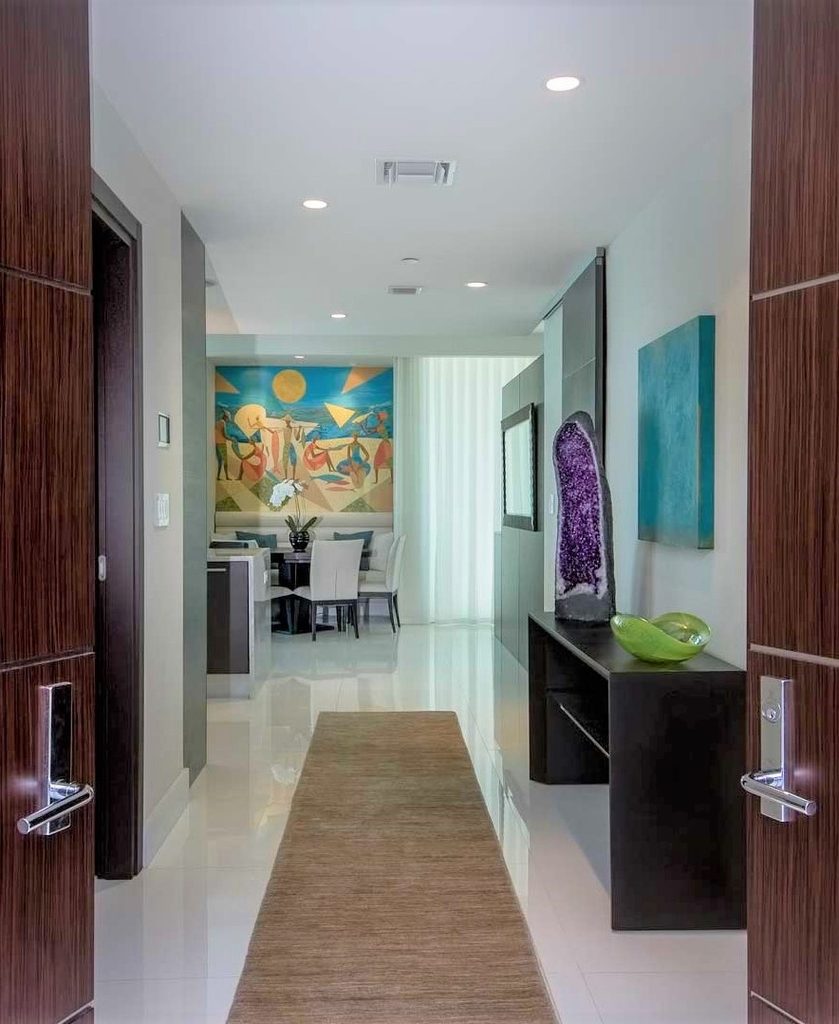
It welcomes you. The first ten feet past your front door do not present you with a task.
It rests you. Somewhere in it there is a chair you can sit in with something solid behind you, facing the room, without bracing.
It feeds you. Not only the kitchen. A place where beauty is available to you without effort — a view, a painting, flowers, light coming through something.
It moves. Energy travels through it rather than pooling in corners or running straight out the back.
It reflects you. At least some of what you see every day was chosen because it means something, not because it matched.
Most homes do two or three of those well. Almost none do all five by accident.
Try this: how to create a sacred space at home, one room at a time
You do not need to renovate. You do not need to spend much at all. Start with one room.
Stand in the middle of it and look at what you see first. Is it beauty, or is it a task? If it is a task, move the task.
Remove one thing you do not love. Only one. Almost every room has an object in it that nobody has chosen in years — it is simply still there.
Add one thing that means something. From a closet, a box, your grandmother’s house. Not something new. Something retrieved.
Change the light. A lamp at seated height instead of the overhead. Let the room know the day has ended.
Then stop and stay in it. This is the part people skip. Do not move on to the next task. Sit down in the room for five minutes and notice what is different in your body.
That last step is where a design change becomes a practice.
Design is a love affair with life
I have said this for years and I mean it plainly.
Design is not decoration. It is the daily practice of deciding what you surround yourself with, and therefore what you are asking your body and your attention to live inside.
There is a golden opportunity in this chapter of your life to bloom into your divine purpose — to own your creative gifts and design a life of abundance and peace of mind.
And the environment is where that begins, because it is the one thing that is with you every single day, whether or not you are paying attention to it.
If you are ready to change the energy in your home and your life — better relationships, more prosperity, more peace of mind — book a Feng Shui consultation and let us talk about what you want this chapter to feel like.
Elevate Your Space. Awaken Your Soul.
Common questions
How do I create a sacred space at home in a small condo?
The same way, only more selectively. Small spaces punish clutter faster and reward intention faster. One clear surface, one beautiful thing on it, good light, and a chair positioned properly will change a condo more than it would change a large house.
Where do I start with Feng Shui tips if I have never done this before?
Start with light and the entry. Those two carry more Feng Shui tips than any list of cures, and both are free.
What is the Feng Shui lifestyle?
It is the ongoing practice of treating your environment as an active participant in your life rather than a backdrop to it. Less a set of rules, more a habit of noticing and adjusting.
Do I need to be spiritual for this?
No. Some of my most contented clients have no interest in the language and simply wanted a home that finally supported them. The room responds either way.
What is sacred home design?
Designing a home around meaning and use rather than appearance — where objects are chosen for what they carry, light is treated as something to be shaped rather than switched on, and each room has a clear reason to exist in your current life.


Be the first to comment